Around the Pub
 ">
">
This page is under construction.
We're still gathering images and information about the things around the pub so this page is not yet complete. Please keep checking back for more information!

The Pub Signs
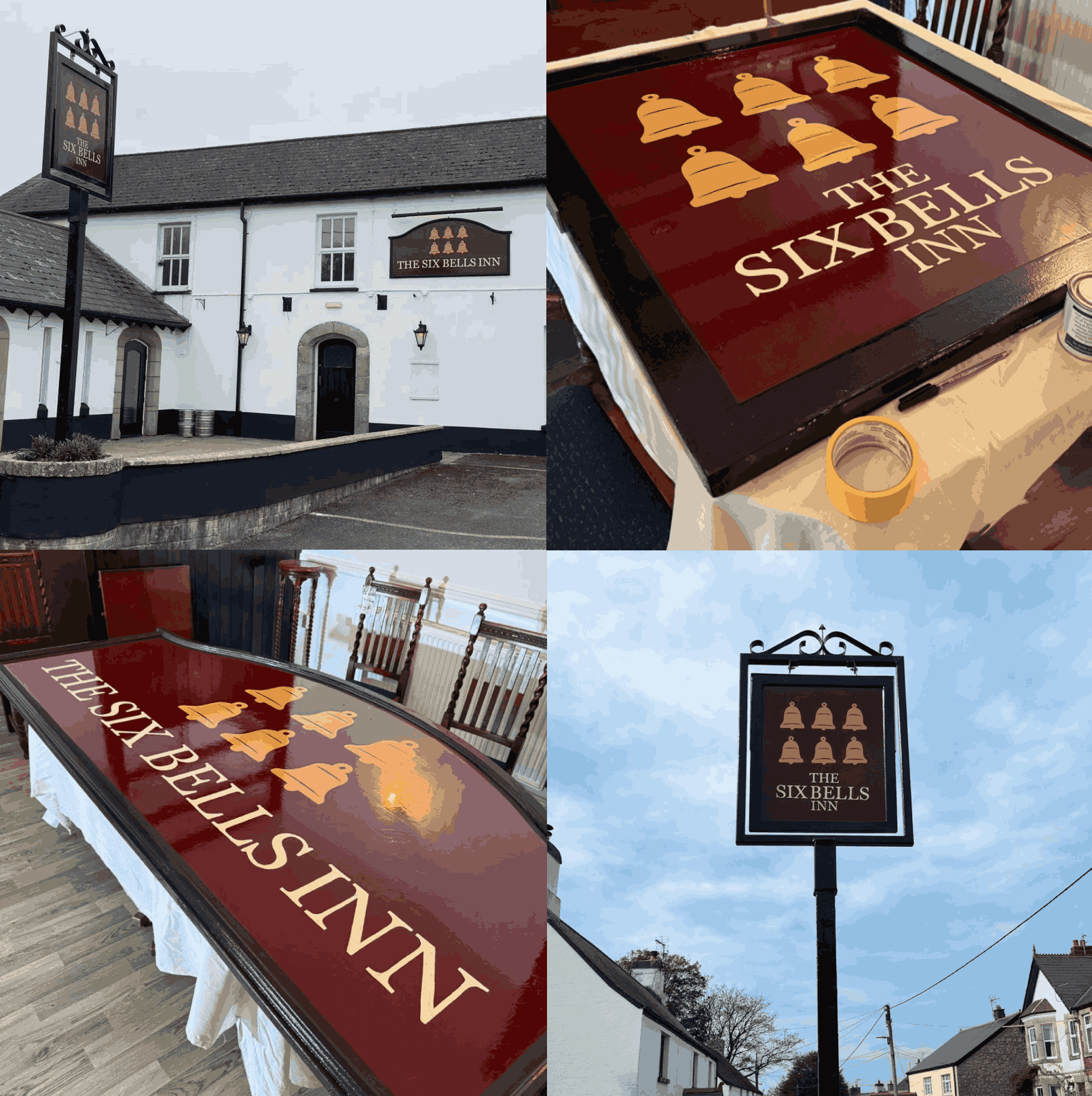
When we took over The Six Bells, our aim was to preserve and appreciate the history of the pub, as well as pubs in general. Our signs are hand-painted, as they likely were before at many points in the past. The background is painted using coach enamel, and the lettering and bells are painted using lining enamel. The signs took a couple of weeks to complete, with 24 hours drying time between each layer, as well as a lot of work to prepare the signs and weatherproof them afterwards.
Location in pub: Outside

The Highchair
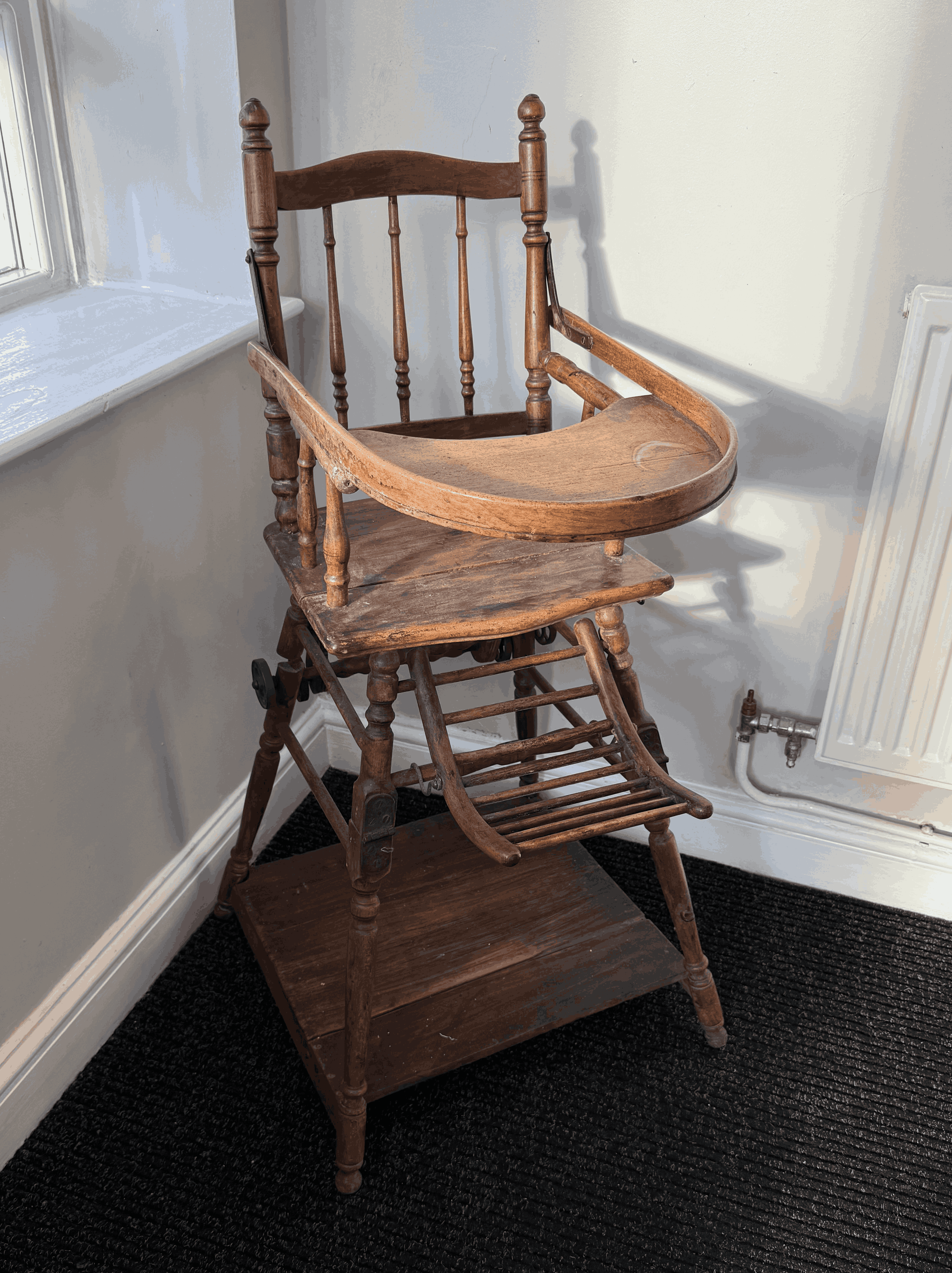
This type of highchair has been dated back to as early as 1890. The highchair has hinges and wheels, so most likely folds and converts into a walker or rocker.
Location in pub: Back of restaurant
Old Penmark Photo (1937)
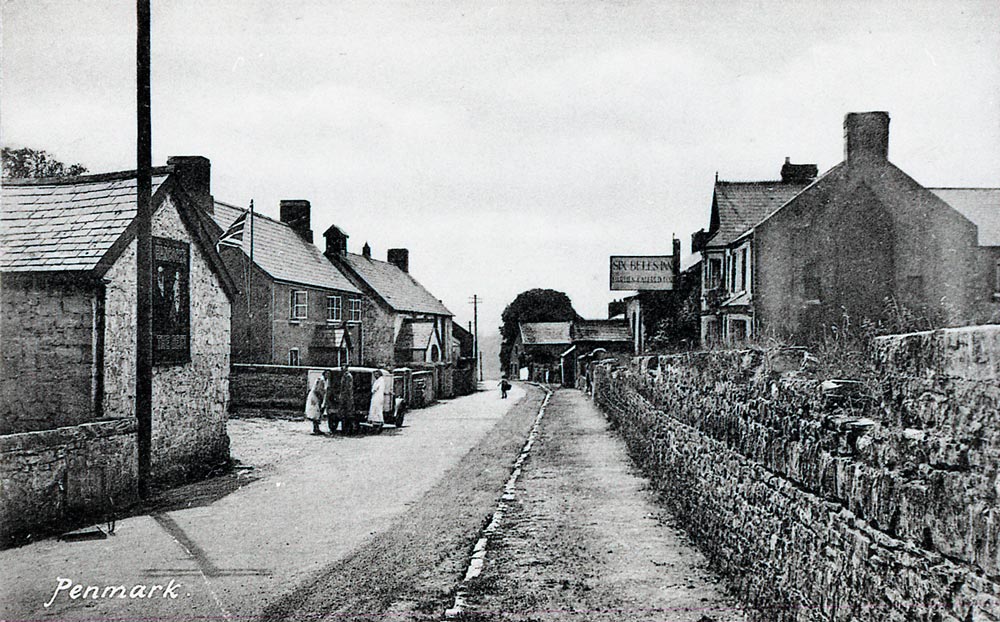
A black and white photograph of the main street through Penmark, with the Six Bells Inn on the right of the picture, found on Francis Frith Collection has a copy of this photo on their website, with the summary: “The Six Bells on the right is the last remaining public house in the village. It was built in the 16th century, and over the years is has been renovated, rebuilt and extended. It was sold in 1875 for under £300, and the sale included the old smithy next door. It was the setting for local author Derek Brock's book 'Cuckoo Marans in the Taproom', published in 1985. On the left is an enamelled sign advertising beer - 'Hancocks: the Best' - and what looks like Jack Barnes's bread van delivering bread to the village.”
Location in pub: Front porch
Derek Brock Photo
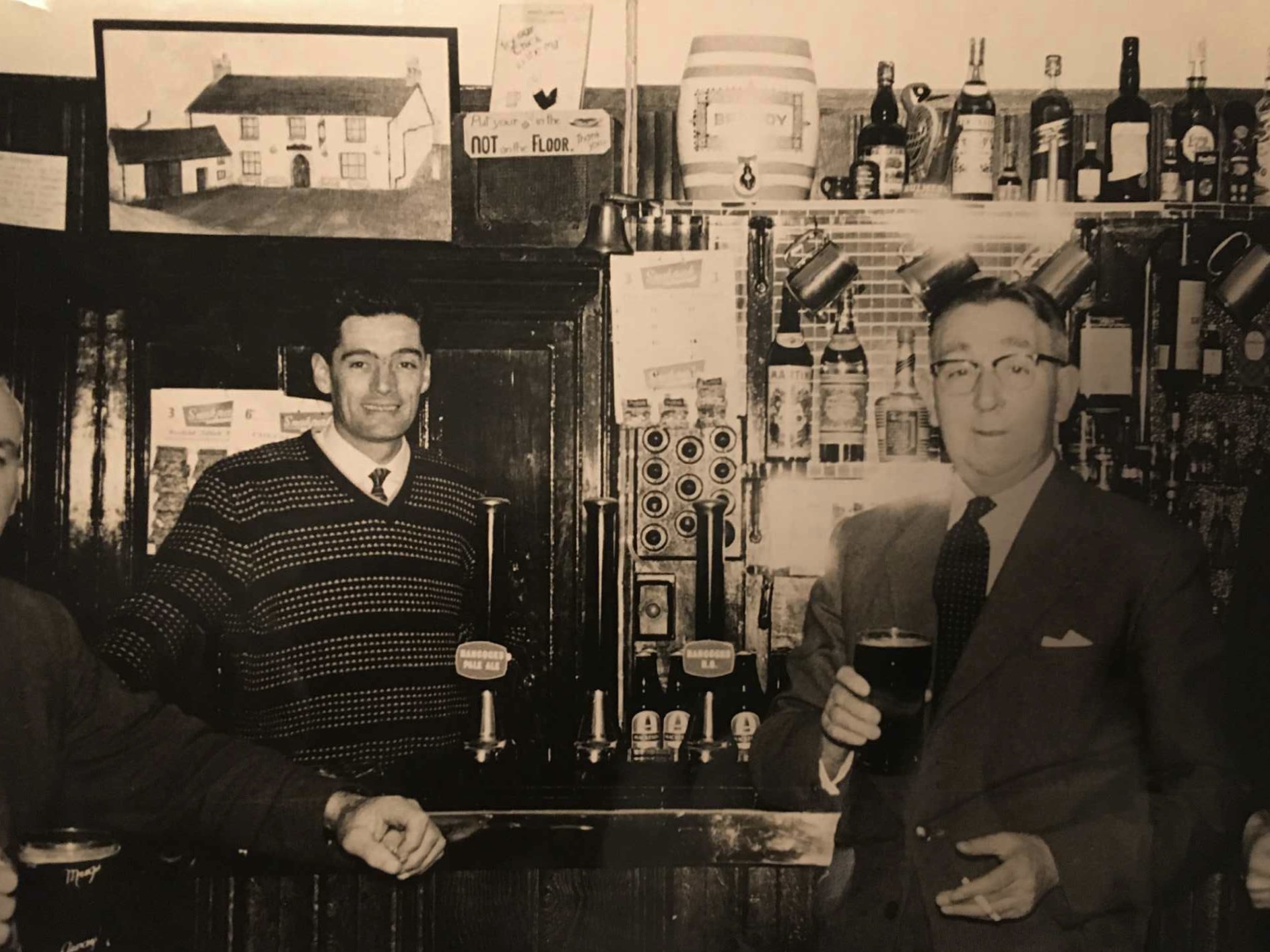
This photo was sent to us by one of Derek’s family members, Emma. In the photo you can see Derek behind the bar. Hancock’s Pale Ale and Hancock’s H.B. are on tap.
Location in pub: Front porch
Bob Styles and Family Members (Photo)
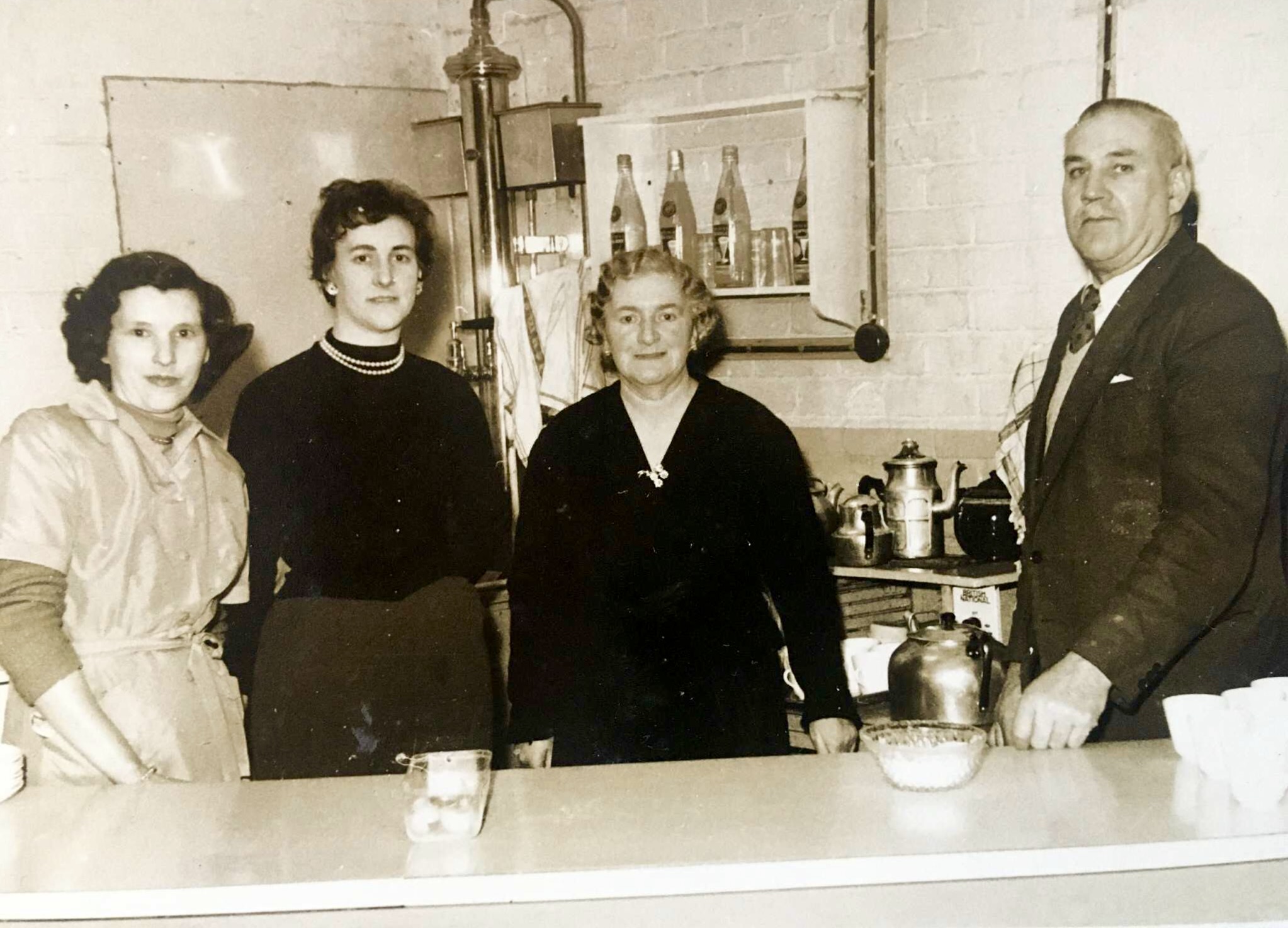
From left to right: Unknown, Winnie Styles, Kate Styles, Bob Styles.
Location in pub: Front porch
Advert from 1963
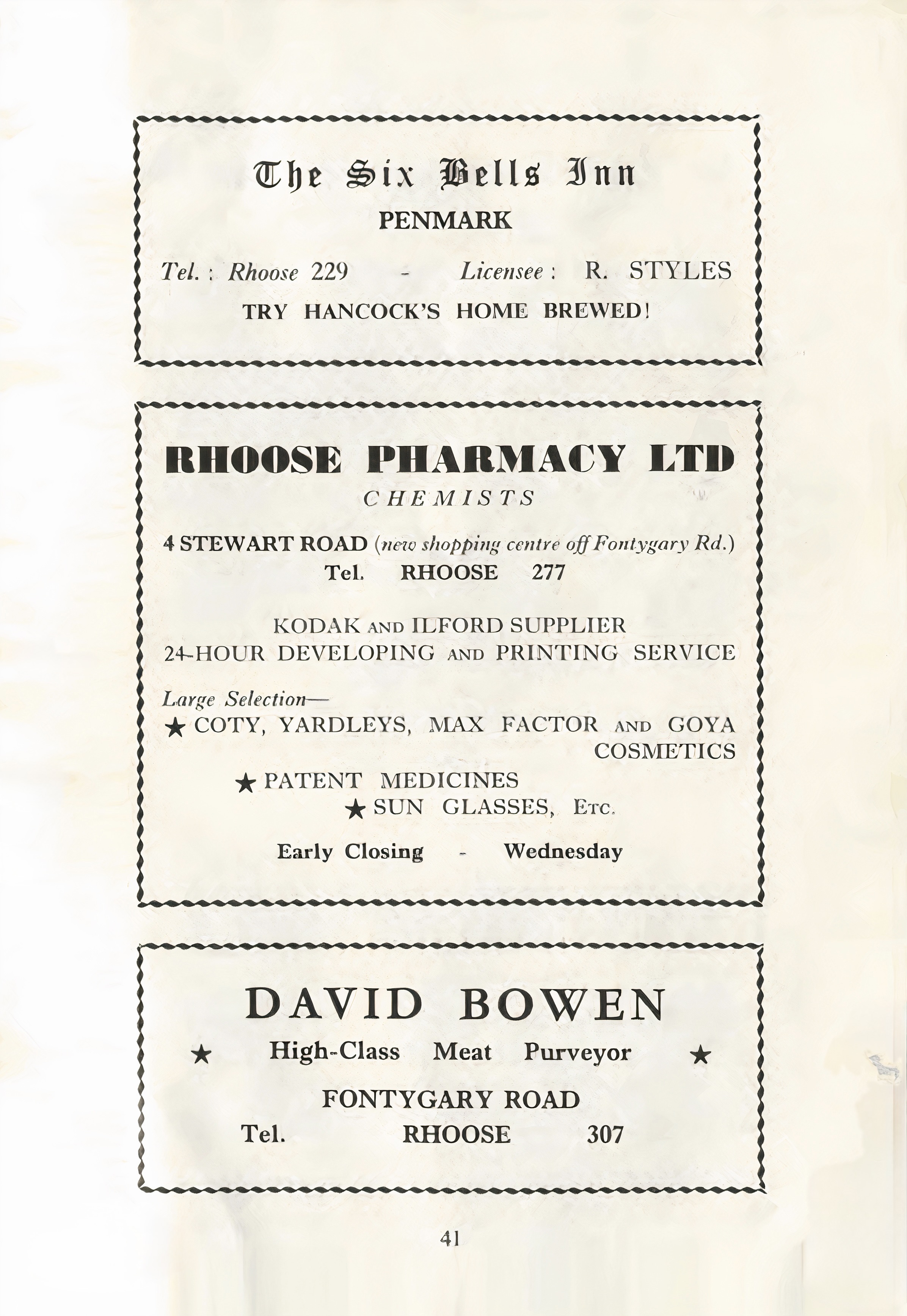
This page has been extracted from Stewart Williams’ book, the Vale of Glamorgan Guide (1963). It shows an advertisement for the Six Bells Inn, which at that time was licensed under Robert Styles, as well as an advertisement for Rhoose Pharmacy Ltd and David Bowen High-Class Meat Purveyor. Parts of the book can be found on the People’s Collection Wales website.
Location in pub: Phone table, near bar door in corridor
GPO Rotary Phone
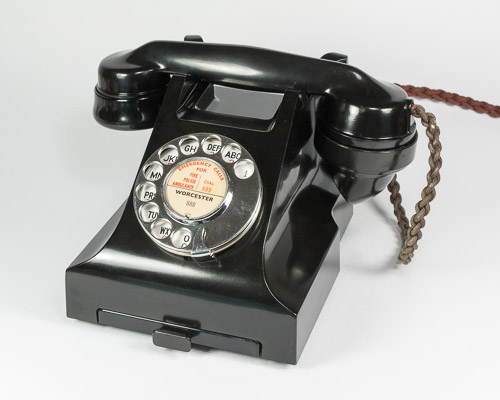
This rotary phone has been loaned to us by some of the local villagers to display on the phone table. In the past, there used to be a phone kept here that customers could use to call out for things such as taxis. The phone is a British GPO (General Post Office) Bakelite rotary telephone. It has a pull-out compartment at the front, nicknamed a “cheese tray”, where you can store a small card with frequently used telephone numbers on it, like a mini address book. This design (the 300 series) was introduced in the late 1930s, however this particular phone appears to be a GPO-332L, a post-war version from the 1940s-1950s. The 300 series telephone was the first standard British Post Office telephone to incorporate everything (including the bell) into a single body, rather than having separate components - earlier phones would often have a separate bell mounted elsewhere in the house. GPO, or General Post Office, originally ran the postal service, telephone network, telegraph services, and even some radio communications in the UK. \They supplied the majority of phones in Britain from the 1800s to the early 1980s. GPO would later become Post Office Telecommunications, then British Telecom.
Location in pub: Phone table, near bar door in corridor
Painting by Norman Fone (2012)
This oil painting of a Christmas scene in Penmark was painted by Norman Fone, a villager, in 2012. It depicts a view from the street, showing the gates to St Mary's Church and part of the pub, covered in snow.
Location in pub: Front porch
Painting by Marjory Henshall
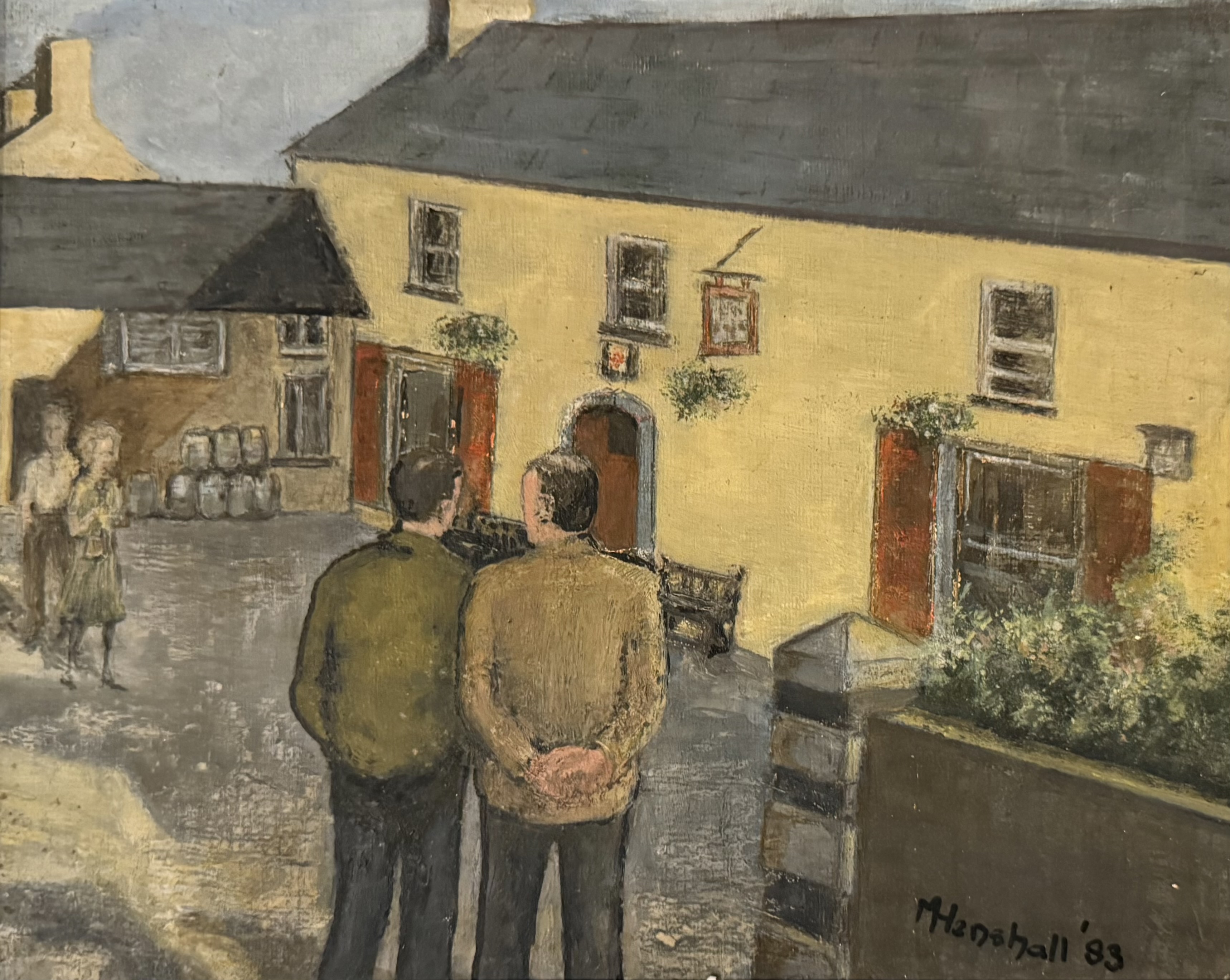
This painting is by Marjory Henshall who lived in Crofthead for around 40 years. She painted it in 1983, and titled it Jim & Ben The Pint Pot Men. In the painting, you can see Jim Regan, a previous villager who lived in Croft John, and Ben Clark, the local road man who lived in No. 1 Cwm Cottages.
Location in pub: Front porch
Mary Currie-Jones Bench
Mary Catherine Currie‑Jones (née Jones), 1922 - 2003, was the wife of Welsh solicitor and Labour politician Emyr Currie‑Jones CBE, and she is remembered in public records and obituaries as a warm and steady presence throughout his long career in Cardiff civic life. Though she did not seek the public spotlight herself, Mary supported Emyr through decades of political service, including his leadership in Welsh‑medium education (Emyr Currie-Jones was known for his role in introducing Welsh-language education in Cardiff) and his cultural work with the National Eisteddfod. Mary died in July 2003, aged 80, and Emyr died later in October 2008, aged 91.
Location in pub: Moving about at the moment
Don Hall (Photo)
A photo of previous landlord, Don Hall. Don was landlord from the 70s to the 90s, and oversaw the major renovations to the pub which included the addition of the Restaurant, kitchen, and Function Room.
Location in pub: Front porch
The Glory Hunters by D. M. Dent
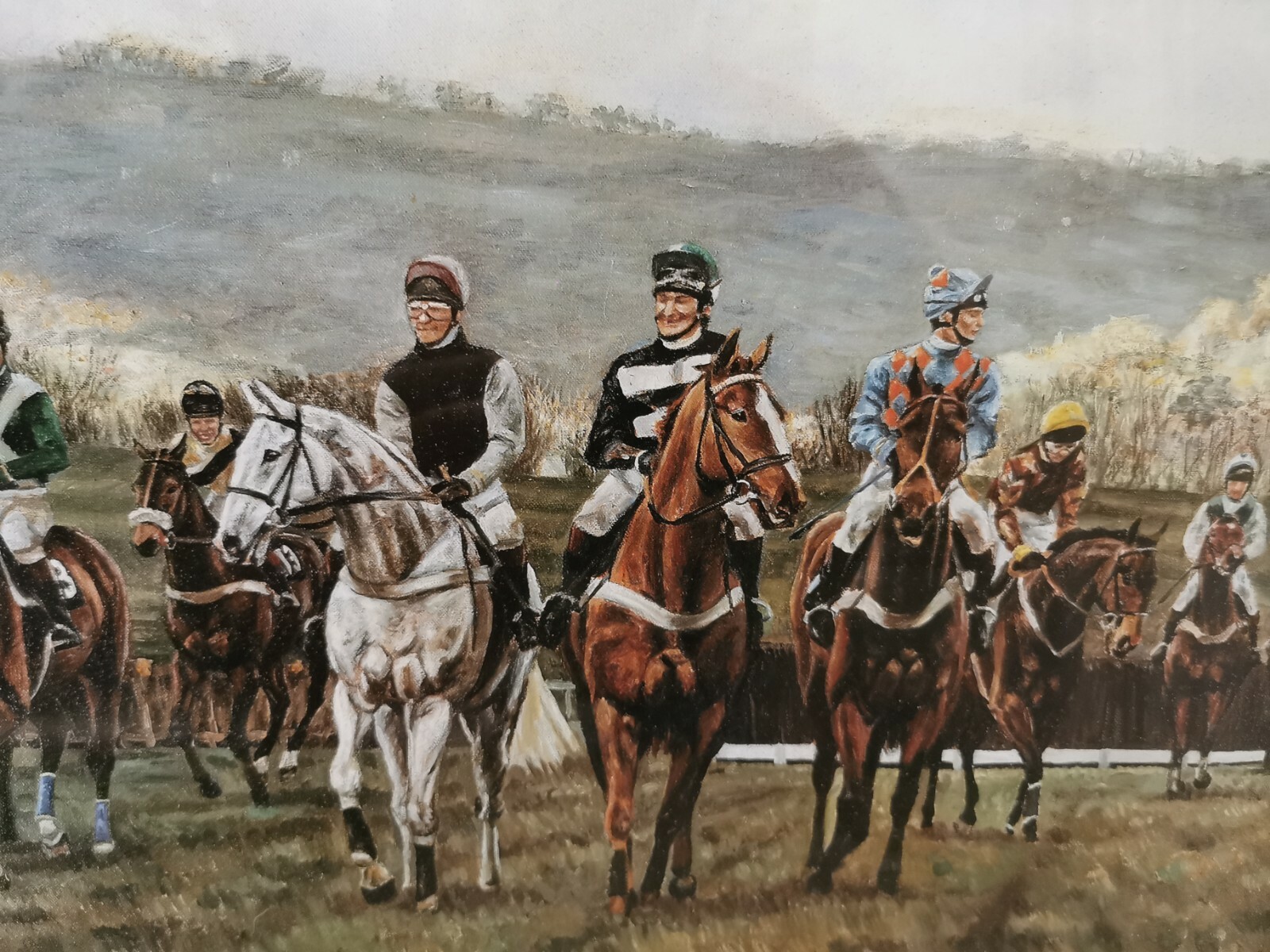
The Glory Hunters (1999) is a limited edition print by David M Dent, one half of the Dent Brothers, who specialise in equine art. The print is edition 142 of 380 and is signed in pencil in the bottom right corner. Dent’s work is renowned for its lifelike depiction of horses and riders, celebrating the spirit of horse racing as well as the timeless beauty of our British countryside. The white horse pictured is thought to be famous racehorse, Desert Orchid (11 April 1979 – 13 November 2006), affectionately known as Dessie.
Location in pub: Back porch
The Minstrel Suite
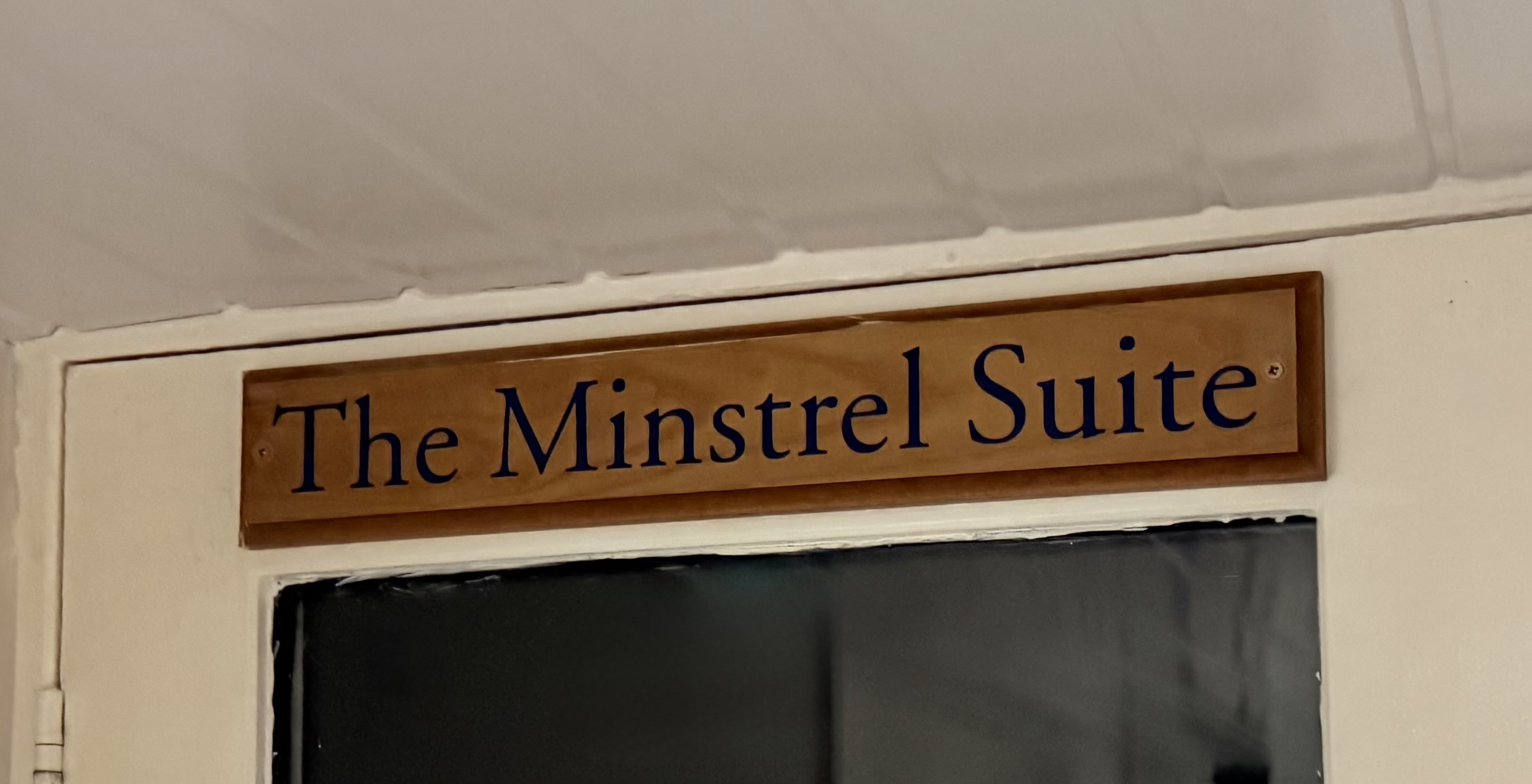
“The Minstrel Suite” is the name of our function room, and is named after minstrels’ galleries, the style of gallery that is present in the room. These galleries were built into the great halls of castles and manors from the 12th century onward, and their purpose was originally to give musicians (typically minstrels) a place to perform discretely above guests, while feasts, banquets, or dances took place below. Places such as Durham Castle, Exeter Cathedral, and the Louvre in Paris all feature minstrels’ galleries, however theirs are a bit bigger than ours.
Location in pub: Door of function room
The Pytchley Hunt by Charles Lorraine Smith
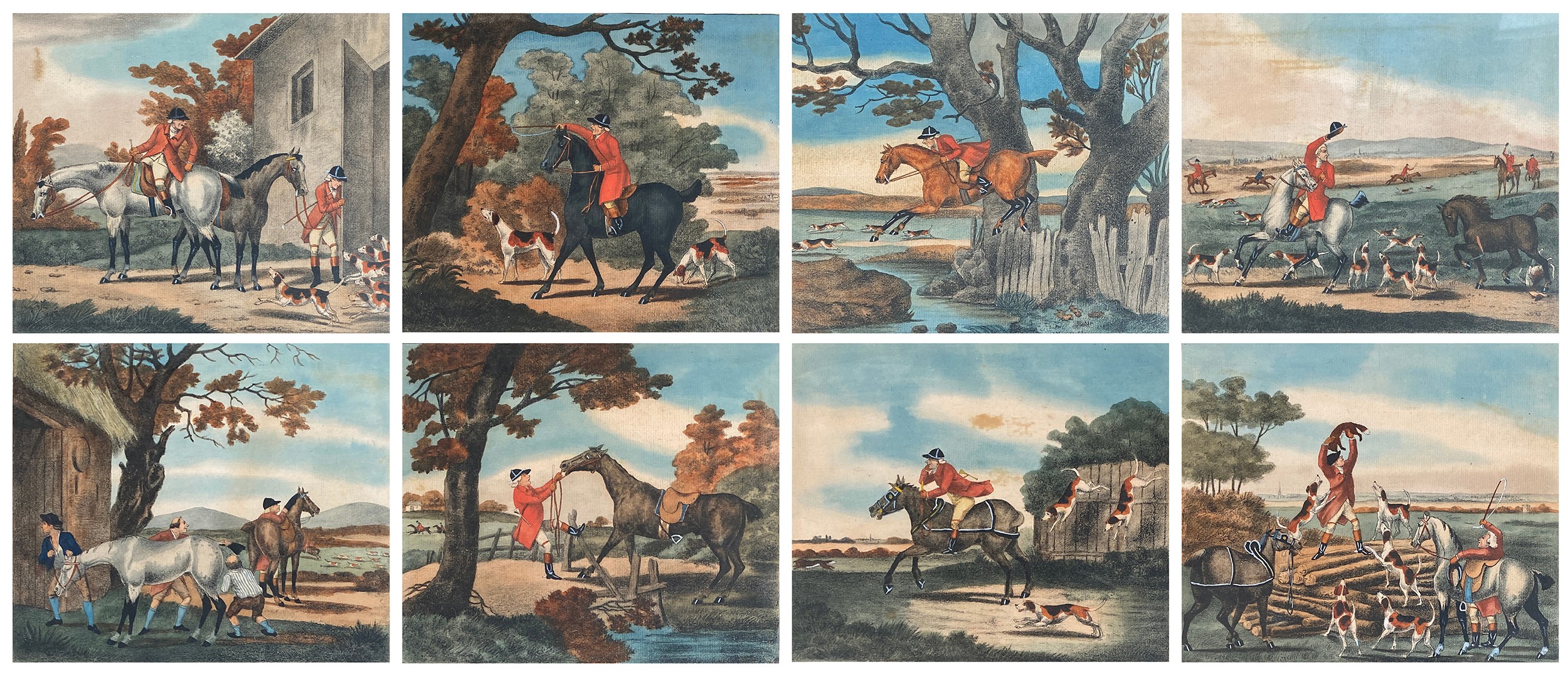
These 8 prints form a complete series of hunting scenes by British artist and politician Charles Lorraine Smith (1751-1835). Smith was celebrated for his humorous and spirited depictions of country sport. The set was originally created by Charles Lorraine Smith and then later engraved and published by Francis Jukes in 1790, so that the art could be circulated more widely. The eight hunting prints depict the great Pytchley Hunt, an organisation now known as the Pytchley with Woodland Hunt, which can be traced back to 1635. This set is the only visual record of the hunt led by the celebrated huntsman Dick Knight. At that time there existed a great rivalry between the Quornites and the Pytchley followers. The prints follow the various mishaps and eventual triumph of Dick Knight. Knight used three horses during the course of the run in order to achieve his victory.
Location in pub: Throughout the hallway leading from the back door to the bar
Hunting Types by Lionel Edwards

Hunting Types is a set of sporting prints, the original set created in 1912 by Lionel Edwards (1878 - 1966), one of Britain’s foremost equestrian and hunting artists. Edward’s depictions of different characters from the hunting world were intended to be both humorous and affectionate. Each print portrays a type of hunting character, such as The M.F.H. (Master of Foxhounds), The Thruster (an eager or reckless rider), and The Dealer’s Man, the horse dealer’s assistant. The set has six prints, however there are only three present in the pub.
Location in pub: Restaurant
Don's Dream
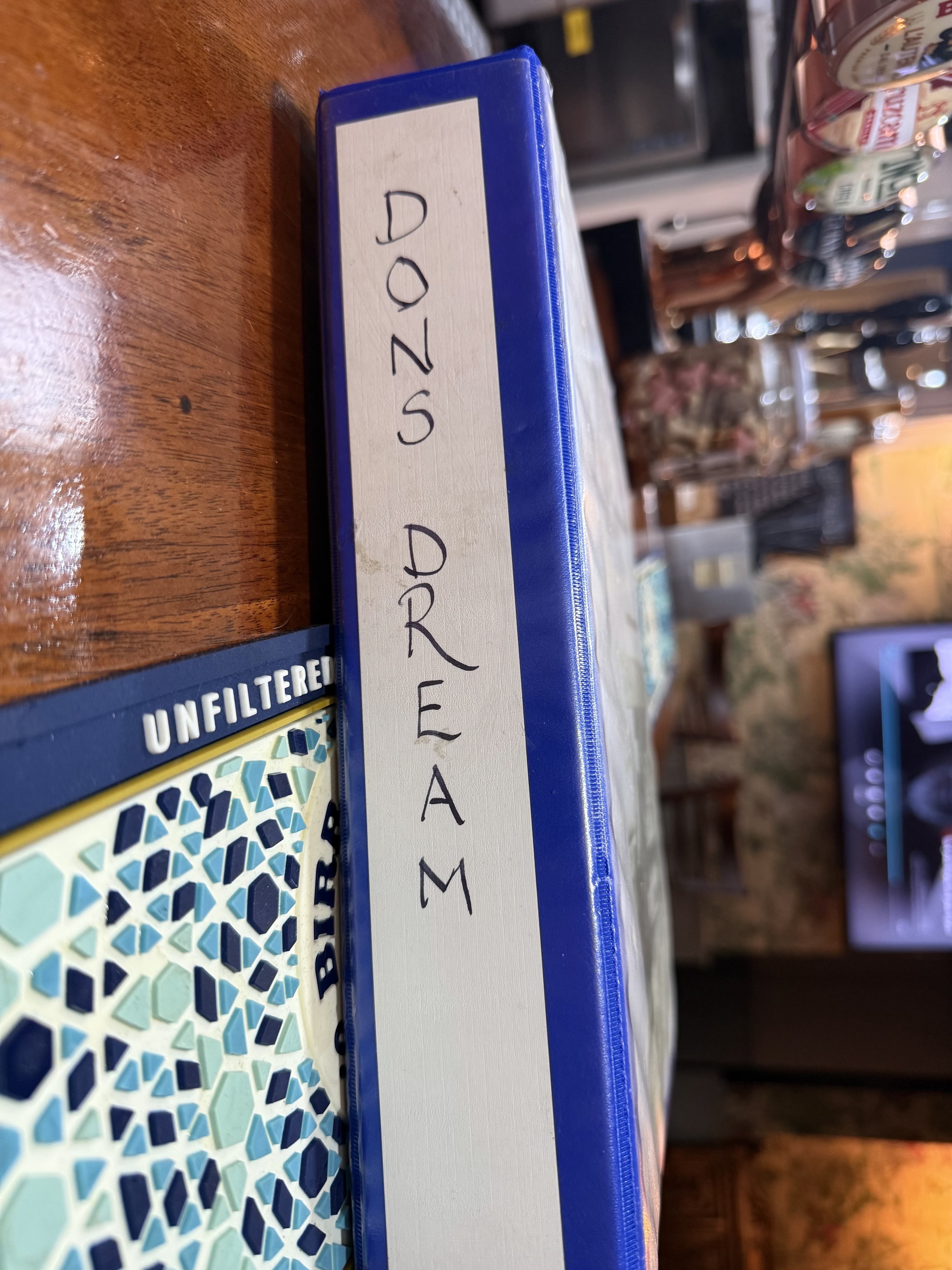
The Don's Dream folder has sat in the Six Bells for years, and shows a collection of images cataloguing the renovations to the pub that took place in 1994.
We have digitised the contents of the folder so that they can be viewed online, which you can view by clicking here.
Location in pub: On the bookshelf, in the Bar
Penmark Past by Maureen Burrows
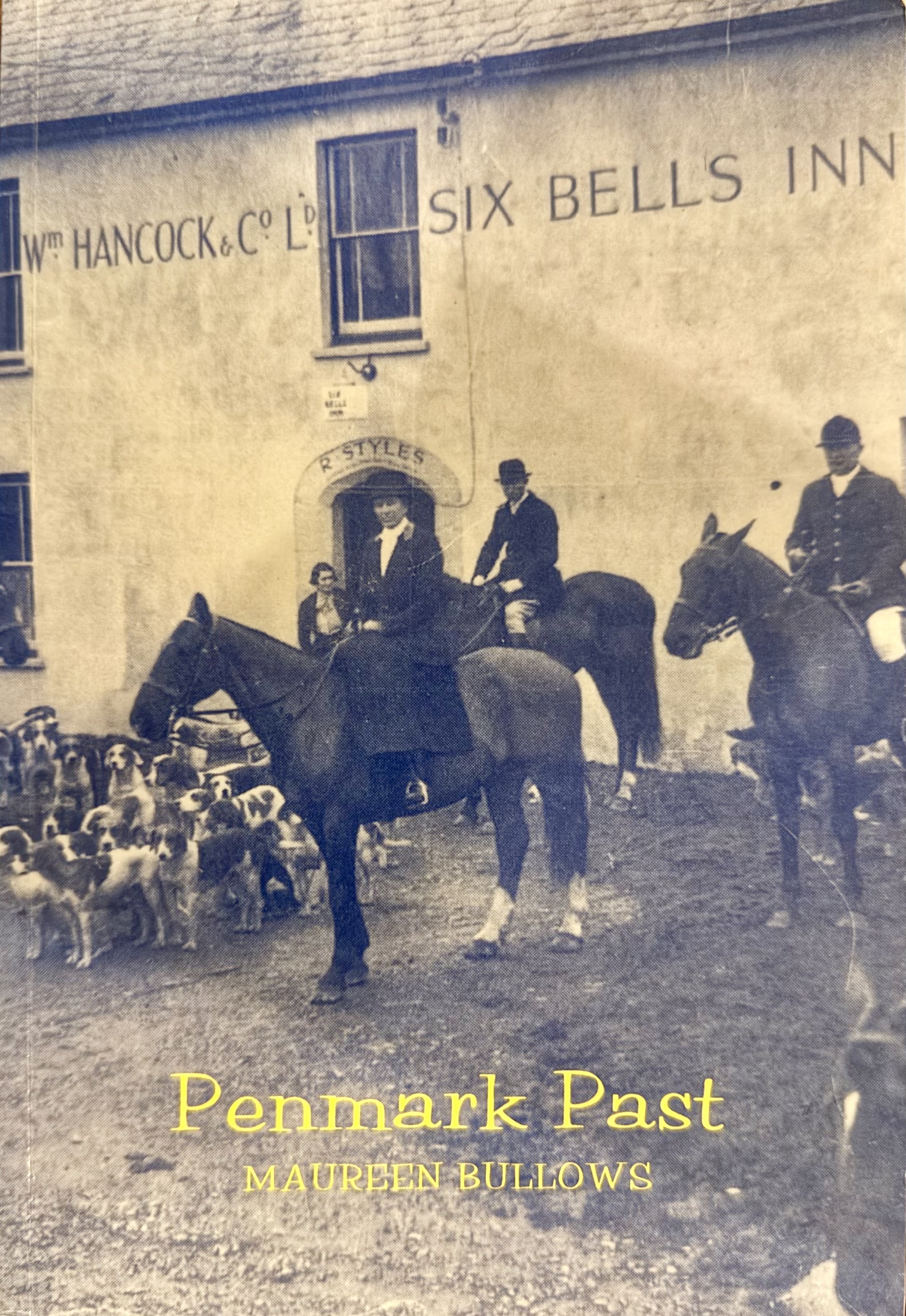
“Penmark Past” by Maureen Bullows is a local history book about the village of Penmark in the Vale of Glamorgan. First published in 1995, it offers 79 pages of historical detail, photographs, and anecdotes about the parish, its people, and its landmarks. It’s considered a scarce title today, often only available second‑hand.
Location in pub: On the bookshelf, in the Bar
Vale of Glamorgan Series by Stewart Williams
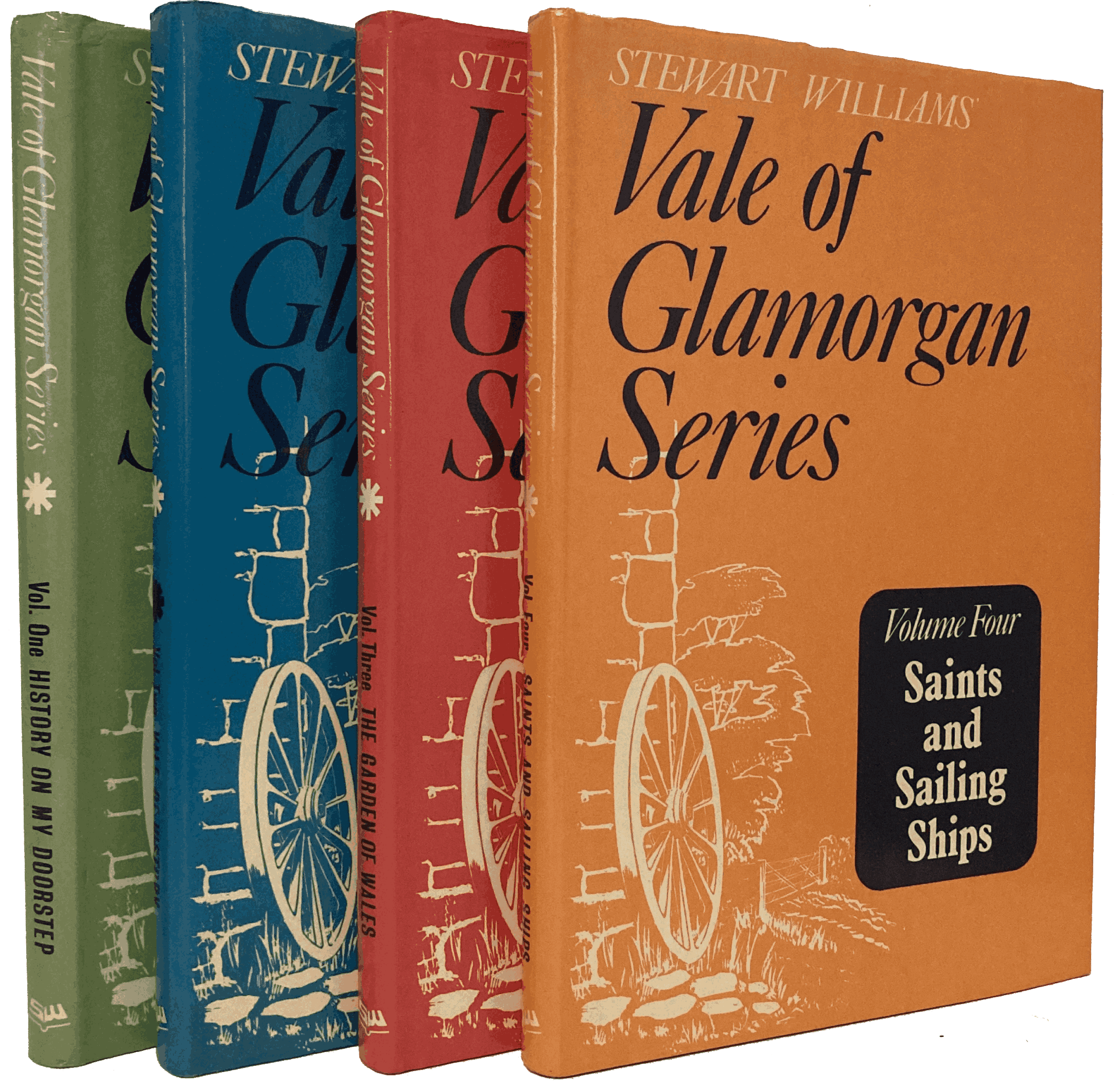
This series of 4 books was donated to us by the author’s two children, Robert and Diane. Stewart Williams was a Cardiff-based historian and author, born and raised in Ely, and a lifelong support of Cardiff City Football Club. The books are made up of contributions from 26 people and there are 250 photos across the four volumes. They were published by D. Brown and Sons, Ltd., Cowbridge, Glamorgan in 1973. Stewart died in 2011 at the age of 85, after writing over 100 books, and has been laid to rest in the cemetery of St Mary’s Church, Penmark. Source: https://www.bbc.co.uk/news/uk-wales-12198626
Location in pub: On the bookshelf, in the Bar
Cuckoo Marans in the Taproom by Derek Brock
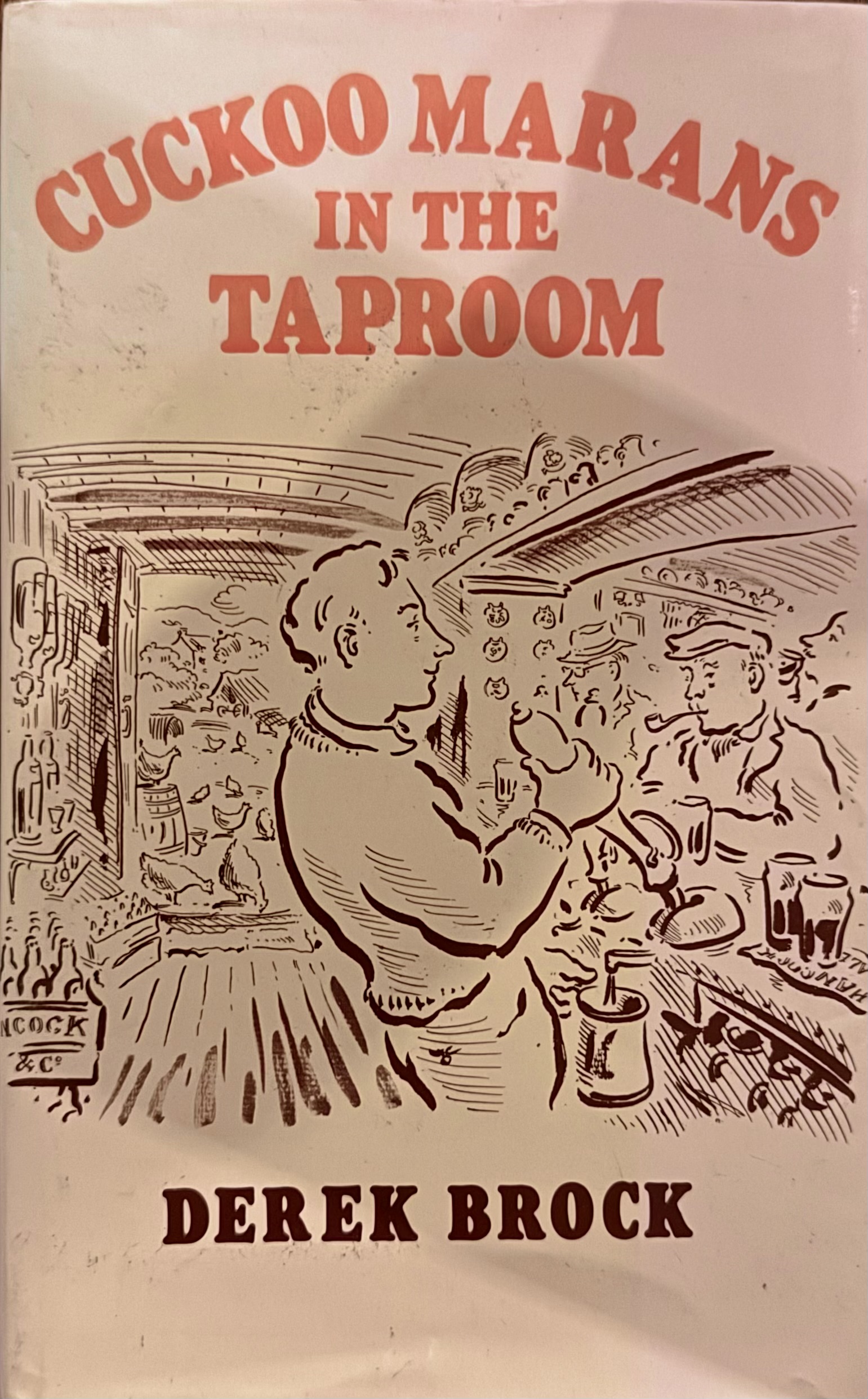
Cuckoo Marans in the Taproom is a memoir by Derek Brock, first published in 1985, about his experiences as an innkeeper at the Six Bells Inn in Penmark, Vale of Glamorgan. It’s both a personal story and a slice of village life, capturing the humour and challenges of running a traditional country pub. The title refers to Cuckoo Marans, a breed of chicken, symbolising the eccentricities and rural flavour of pub life. It’s filled with anecdotes about local characters, village traditions, and the everyday humour and trials of being a publican in rural Wales.
Location in pub: On the bookshelf, in the Bar
Becky's Drawing
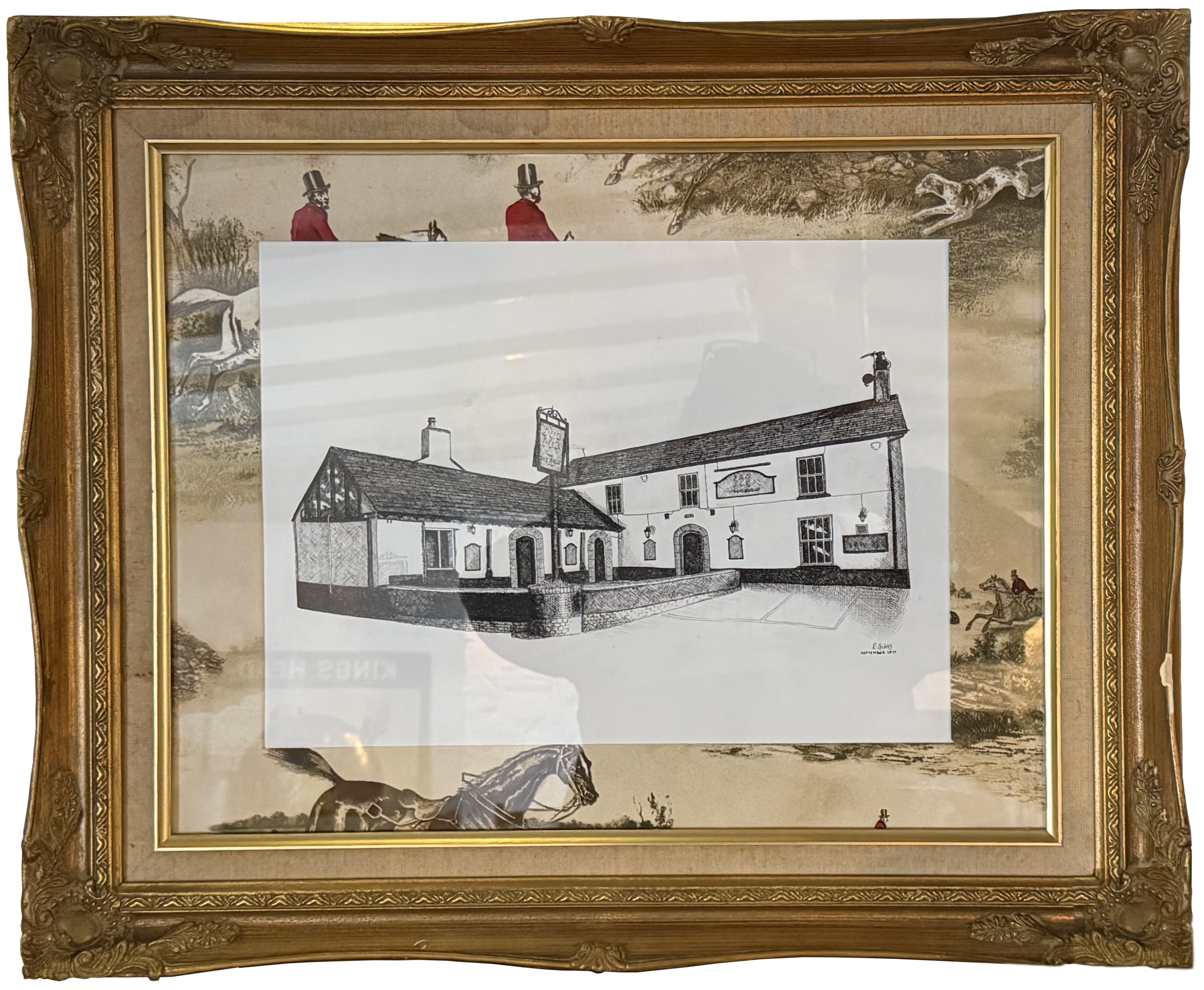
Becky’s drawing of the Six Bells, started and finished within the month of September 2025. Taking around 5 hours to complete, the drawing was created using black ink on white card. It’s framed off in a cut off of Country Pursuits wallpaper (by Lewis & Wood), found under a chair in the pub. The wallpaper once lined one side of the main Bar area, however was lost to renovations under previous management in 2024. The frame was rescued from a local charity shop.
Location in pub: Left side of bar
Hancock's Brewery Tankard
This tankard was likely produced as a piece of promotional merchandise for Hancock’s Brewery. The brown and cream stoneware finish is typical of brewery advertising ceramics in the 1970s to 1980s. The man depicted on the tankard became a major part of Hancock’s brand identity and could be see on signs, posters, and more. Hancock’s Brewery was founded in Cardiff, and began brewing beer when the firm acquired the North and Low's Bute Dock Brewery in 1883. Hancock’s Brewery was later acquired by Bass Charrington Ltd in 1968 (along with 505 tied houses), then became Welsh Brewers, and later Bass Wales. The brewery was sold to Brain & Co. Ltd in 1999. We acquired the tankard when we purchased it from a local resident during a village table-top sale.
Location in pub: Behind the bar.
Six Bells Enamel Sign
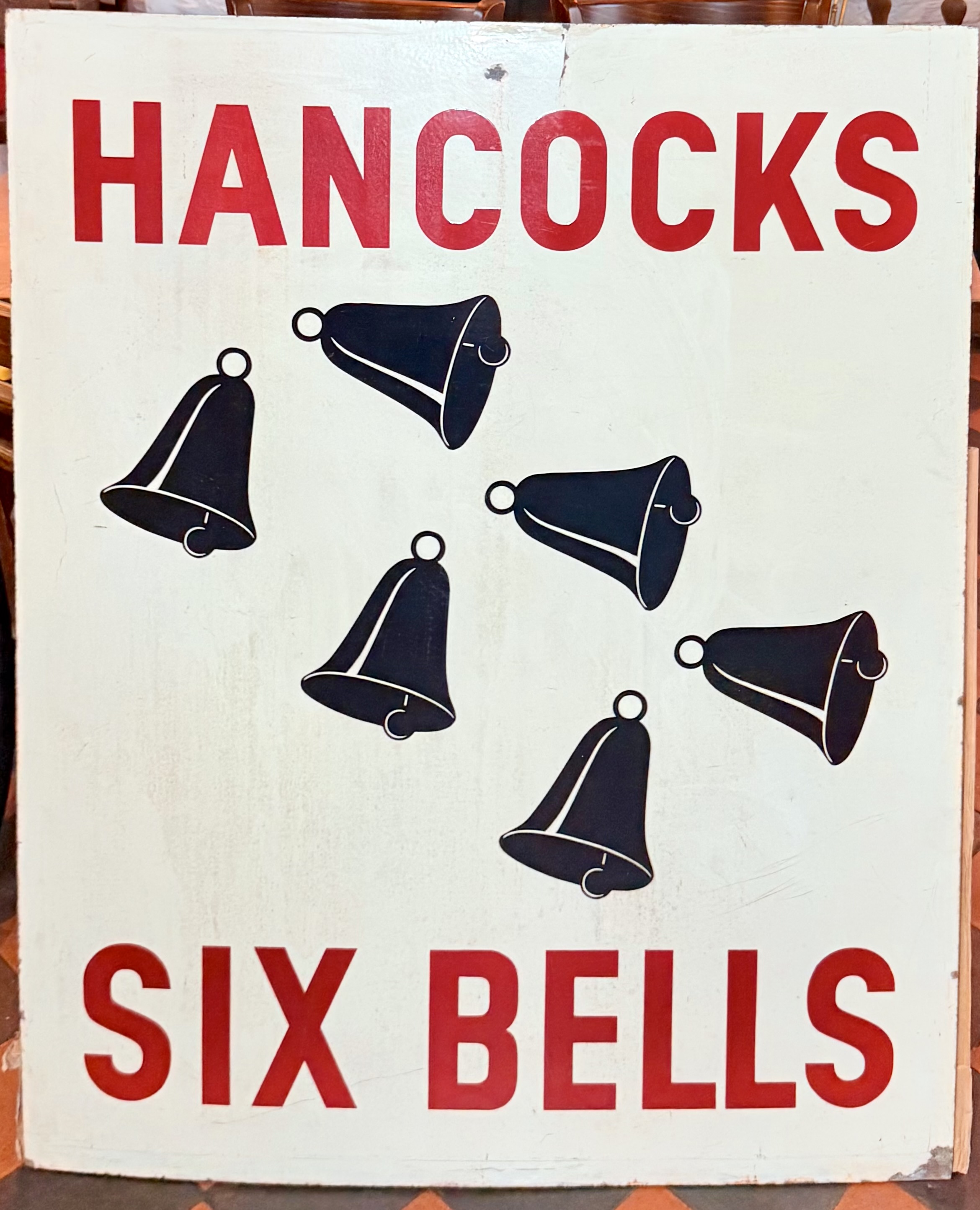
This enamel sign is originally from around 1920, and was created for The Six Bells when it was controlled by Welsh brewery, Hancock & Co. Kyle was searching online for Hancock’s HB ale pump badges, when he stumbled across the sign being sold by an antiques dealership based in Plymouth. We’re so proud to have brought it home where it can stay, displayed proudly in our bar.
Location in pub: Left of fireplace in Bar
Six Bells Inn / W M Hancock Sign
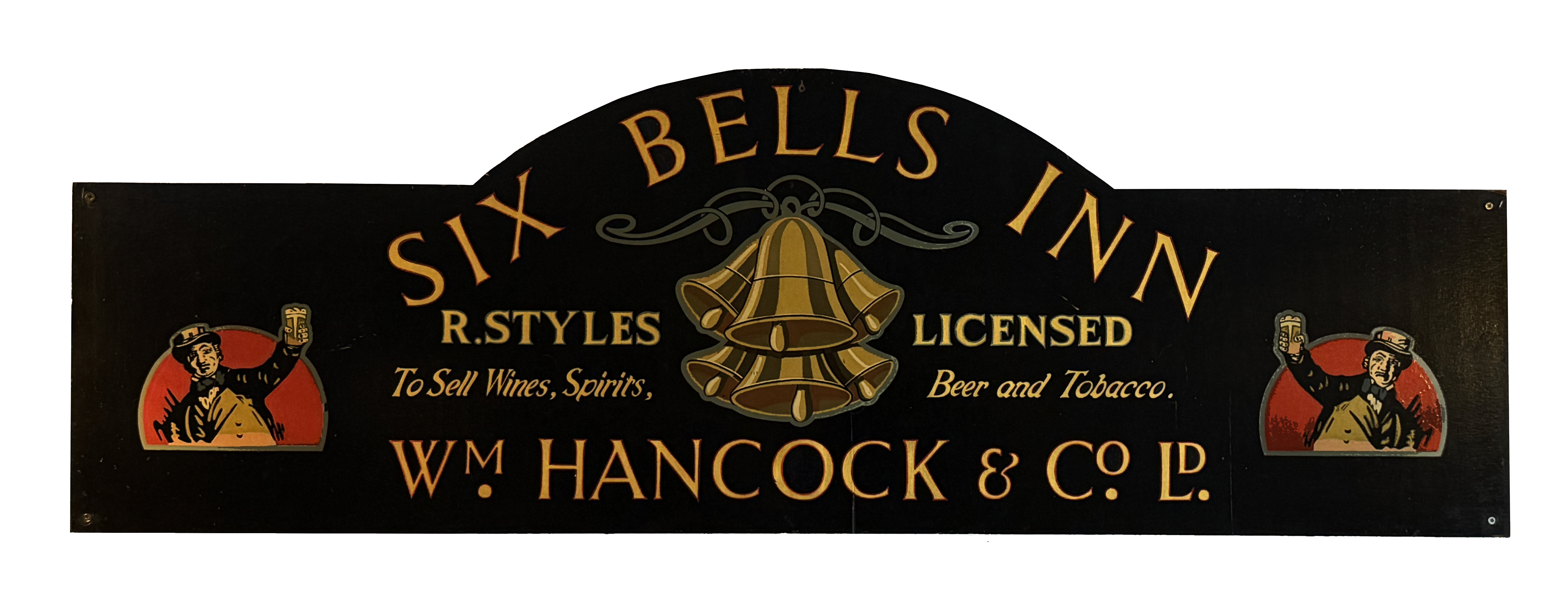
This sign sits above the Bar fireplace, featuring two Hancock’s “drinking men” on either side. R Styles refers to Robert/Bob styles, who was landlord in the early 60s before passing the pub to his daughter and son-in-law in 1962.
Location in pub: Above fireplace in Bar
King's Head Enamel Sign
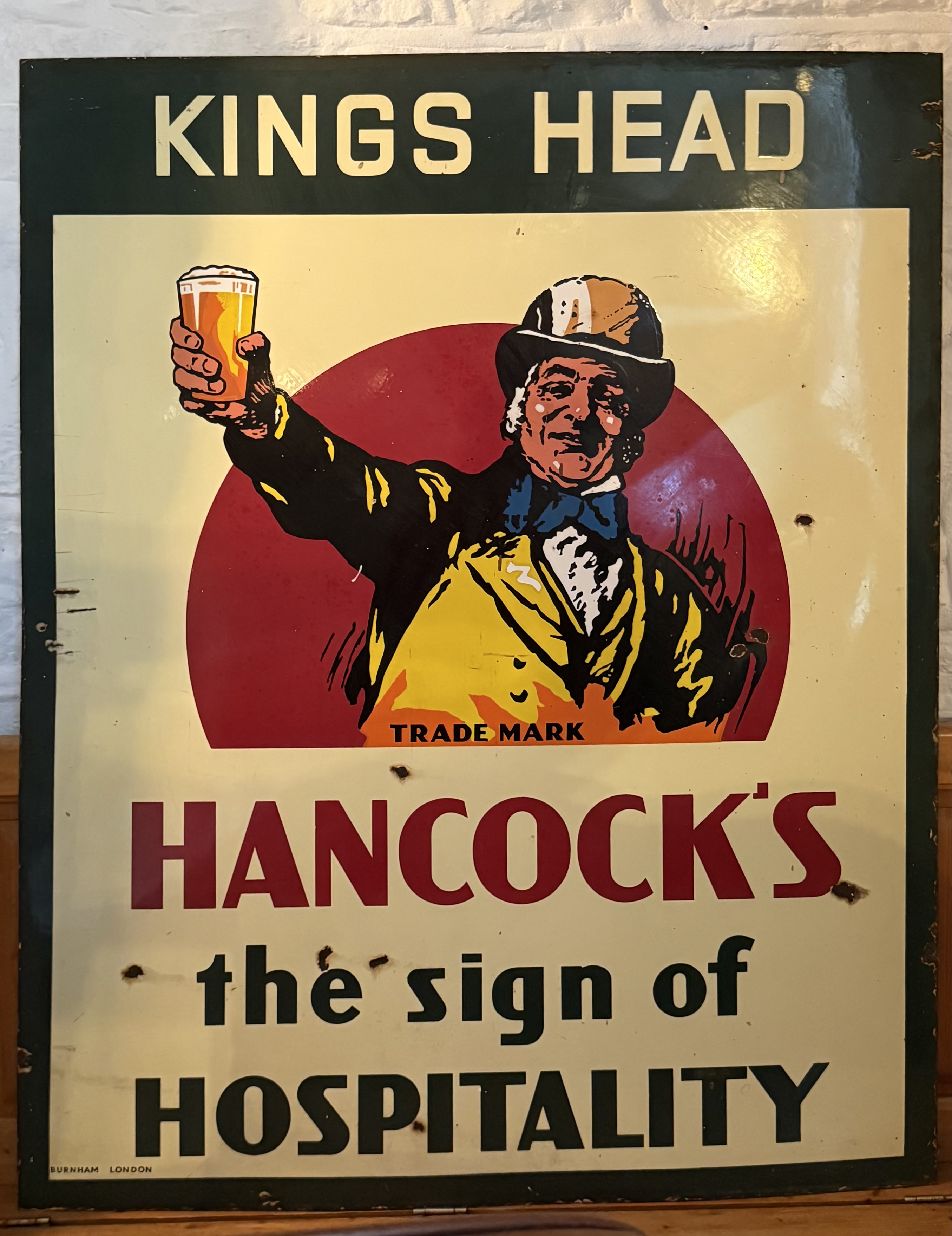
The image of the “drinking man” was typical of Hancock’s branding at the time. The logo was created to represent satisfied Hancock’s customers, raising a pint of their ale in celebration. It was used widely in Hancock’s pubs across Southern Wales and South West England, before the brewery was absorbed into Brains Brewery in 1999. The sign itself is from another pub, most likely The Kings Head in Llantwit Major or Bridgend.
Location in pub: Right of fireplace in Bar.
Bar Table
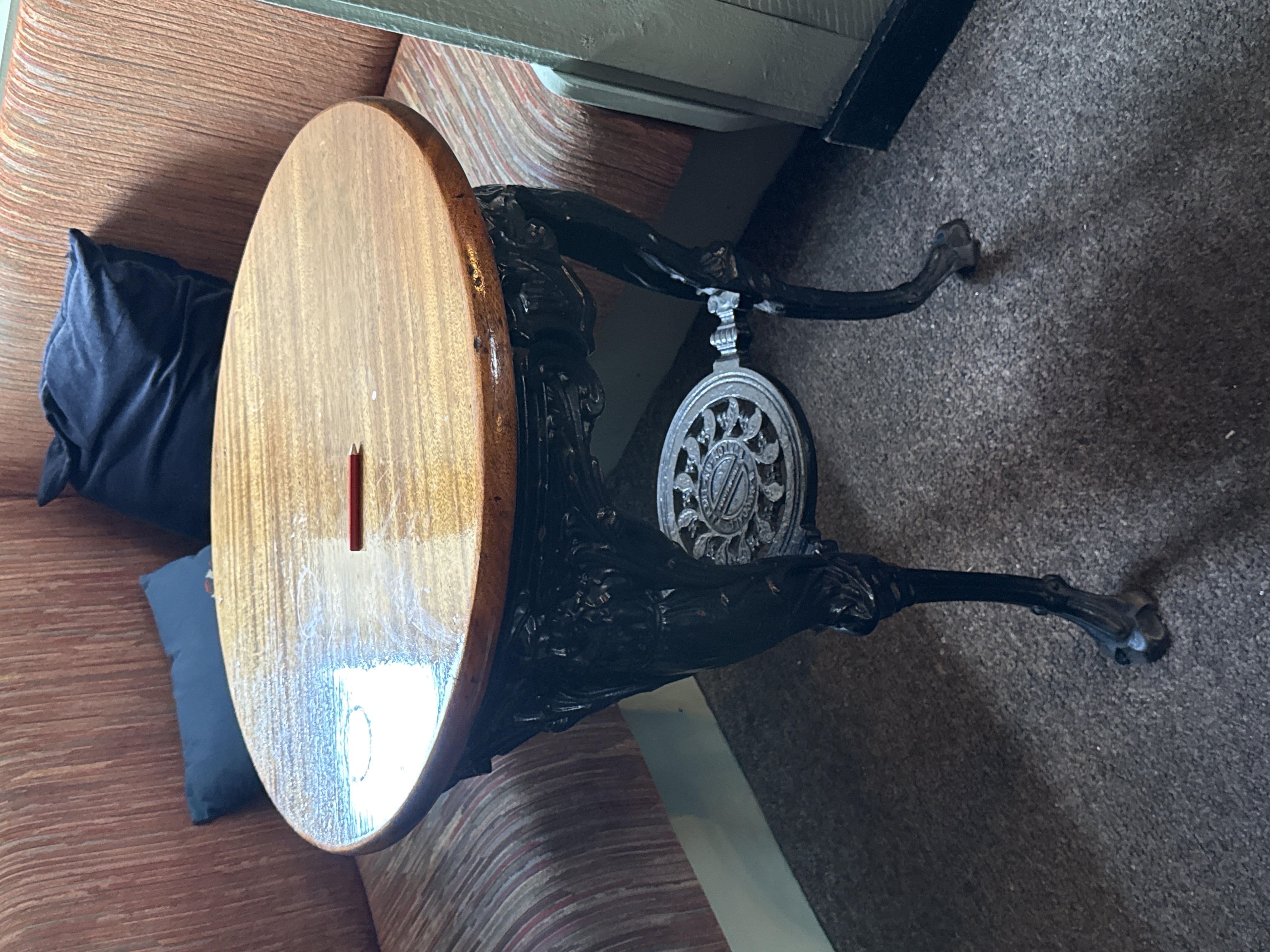
This bar table is an example of a Victorian or Edwardian cast-iron tripod table, likely originating between 1880 and 1910. The design is distinctly late-19th century, with caryatid-style female figures on each leg (caryatids are cloaked female figures, used as a pillars or supports). On the base, you can clearly read “B.Goodall Furnishers, Burton-on-Trent”, which tells us the table is British-made, originating in Staffordshire. The base is cast iron and the top is varnished wood. The tripod legs are a hallmark on classic pub furniture, as the three legs provide stability on uneven floors (they wobble a lot less). It’s easy to miss as it’s just a table, but it’s a piece of British industrial and social history.
Location in pub: The snug, in the bar.

Fryco Stoneware Bottle
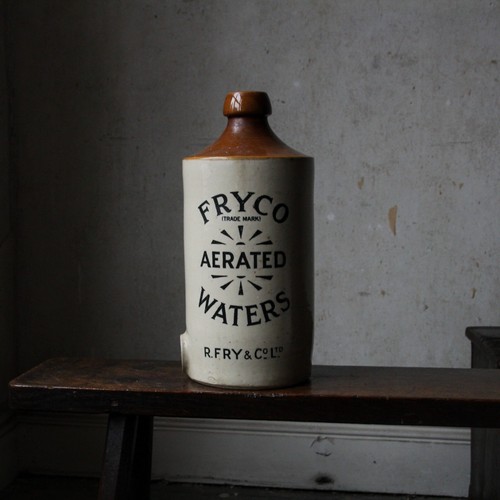
A Fryco Aerated Waters, early 20th-century stoneware bottle with rich honey-glazed shoulders and bold black lettering: “FRYCO (Trade Mark) Aerated Waters, R. Fry & Co. Ltd.” Stamped “2 GALLS” near the neck. A sturdy, tactile piece of industrial pottery
Location in pub: Lounge bookshelf.
More History…
Have you seen our History page? It's got more information about the past of the Six Bells and Penmark itself. Click the button below to go there.
History